
In This Guide
- Quick Answer: What Is Documentary Wedding Videography?
- Documentary vs Cinematic: The Real Differences
- What It Looks Like on Your Wedding Day
- Why Real Audio Matters: Vows, Speeches, Laughter
- Is Documentary Style Right for You?
- How I Approach Wedding Films
Quick Answer: What Is Documentary Wedding Videography?
Documentary wedding videography films your day as it actually happens, instead of staging it. The videographer watches and listens more than they direct, then builds the film from real moments and real sound: your vows, the speeches, the laughter in between. The result feels like your day. A heavily produced cinematic film leans more on posed shots and a soundtrack.
Documentary vs Cinematic: The Real Differences
“Cinematic” and “documentary” get used loosely, and plenty of films mix both. My own films use cinematic camera work, but the story comes from what really happened. So think of it less as two boxes and more as a question: what carries the story, the moments or the production?
| Documentary-led | Production-led | |
|---|---|---|
| Direction on the day | Light. A little for portraits, then you get on with your day | More set-ups, posed moments, sometimes repeated |
| What carries the story | Real voices: vows, speeches, family | Music and slow, styled shots |
| How it’s built | Around the order and feeling of your day | Around a song or a mood |
| What you remember watching it | How it felt | How it looked |
Neither one is wrong. A production-led film can be gorgeous. But if you watch a trailer and every couple seems to be doing the same slow-motion walk to the same kind of song, it’s worth asking how much of their own day ended up in the film.
What It Looks Like on Your Wedding Day
For you, documentary style mostly means you can stop performing.
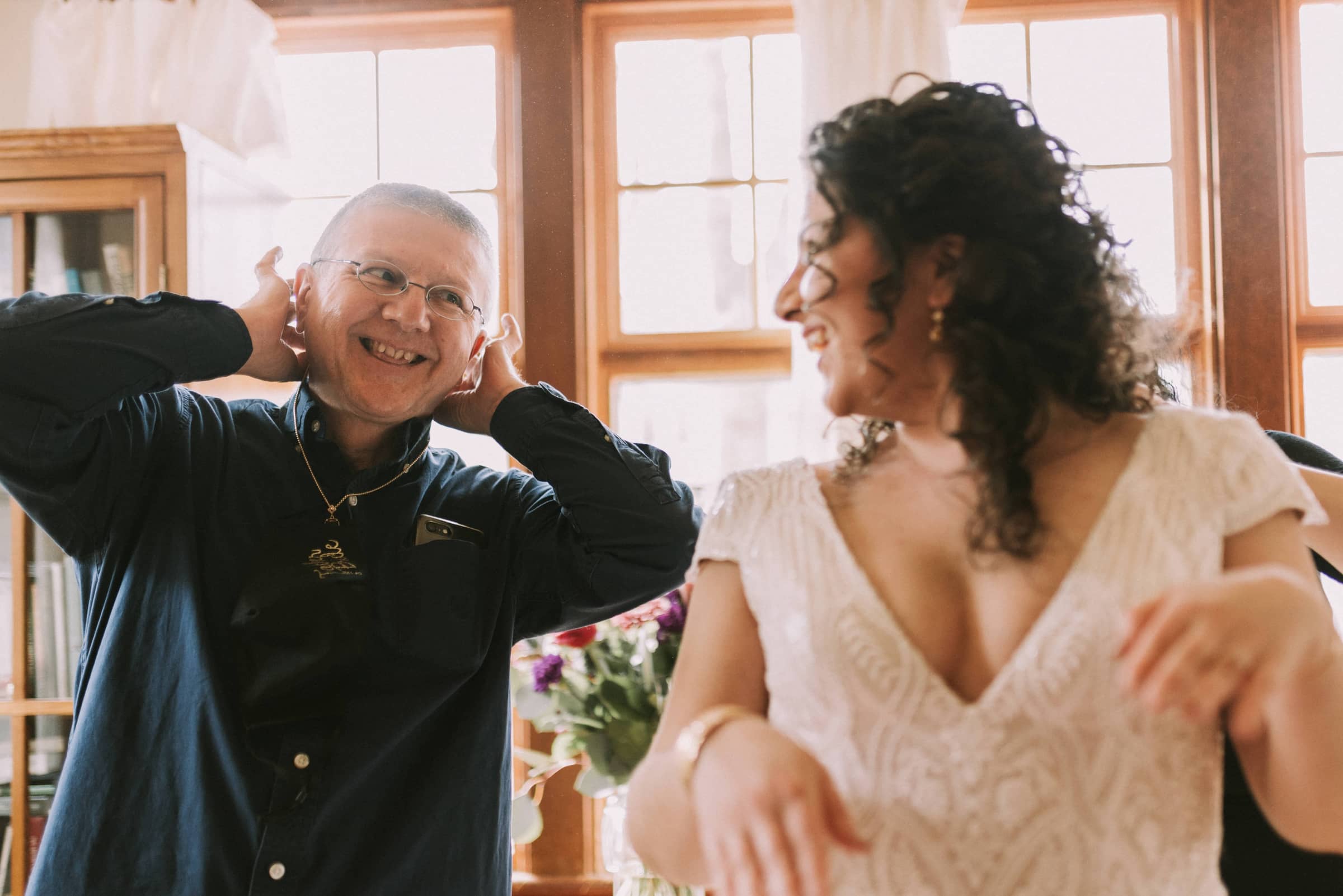
Getting ready. I film what’s already happening: a parent doing up buttons, a cousin running late, someone reading a letter. I won’t ask you to put your earrings in three times.
The ceremony. I stay out of the way and let it play out. No stopping the officiant, no redoing the first kiss. If your ceremony has rituals, we go through the order together beforehand so I know where to be for each one.
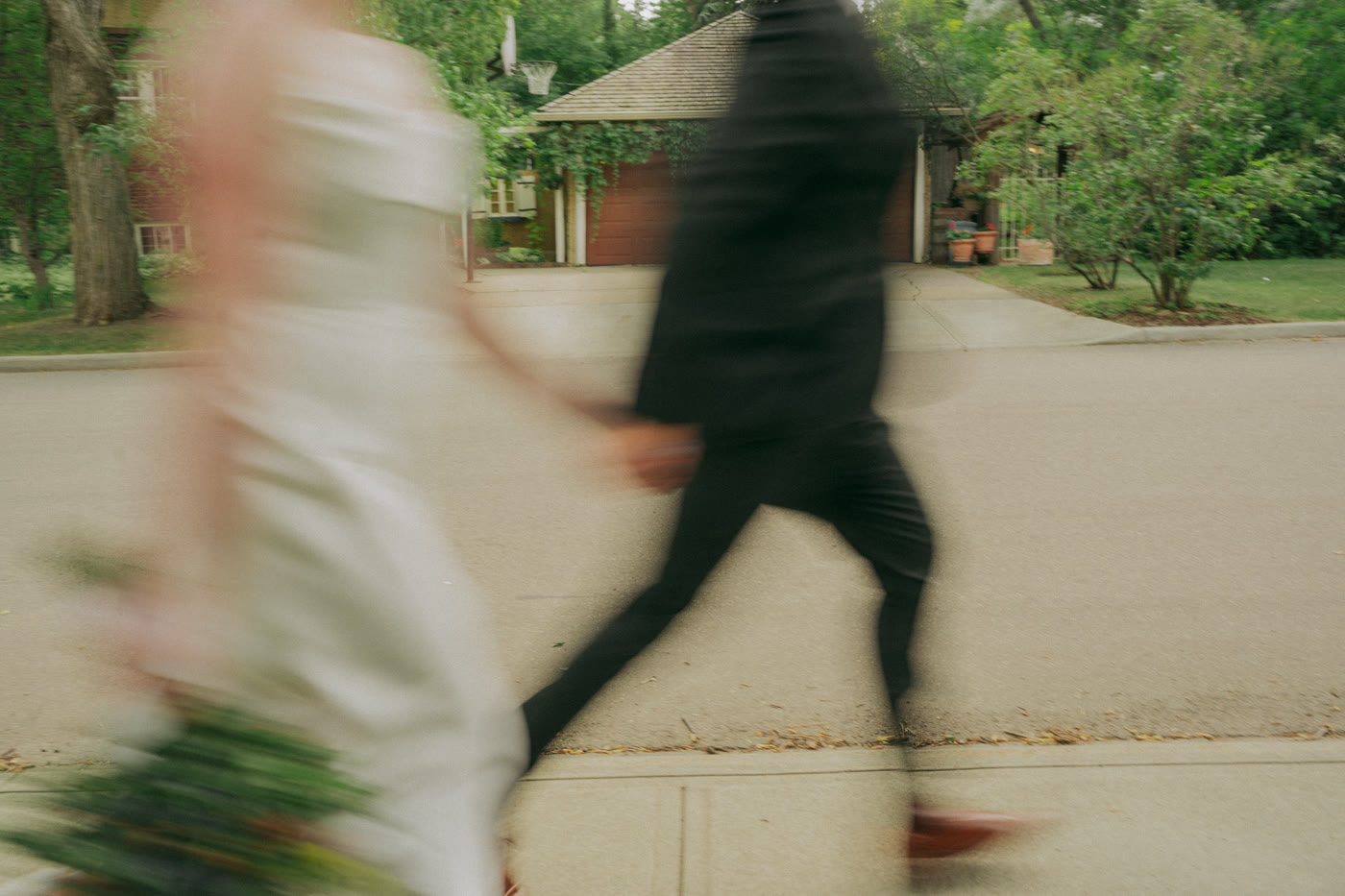
Portraits. This is the one part where I give some direction: where to walk, where to stand, which way the light is coming from. Then I step back and let you two be yourselves.
The reception. Entrances, speeches, dances, and everything in between. The speech that goes off-script. The uncle who takes over the dance floor. The grandparent who stays up later than anyone expected.
Some of the best footage of the day comes from moments nobody planned. A documentary approach is built to catch those, because the camera is already rolling when they happen.

Why Real Audio Matters: Vows, Speeches, Laughter
This is the part people underestimate until they watch their film.
A photo can show your dad mid-speech. Only video keeps his voice cracking on the line he practised all week. Only video keeps your grandmother’s laugh, the dhol starting up, or the whole room going quiet before the vows.
In a documentary film, that sound is the spine of the story. Instead of laying a song over everything, I build the film around what people actually said.
That makes a few planning choices matter more:
- Vows: speak a little slower and louder than feels natural. You’re talking to each other, but the room needs to hear you too.
- Speeches: use the microphone, even the confident speakers. Nobody can hear a speech over a room of chatting guests.
- Order of events: let me know when the important words happen, including any surprise speeches, so I’m ready.
Is Documentary Style Right for You?
It probably is if:
- you’d rather hear your vows again than watch a slow-motion montage;
- you get uncomfortable when someone tells you to “act natural”;
- your family is loud, funny and emotional, and you want that in the film;
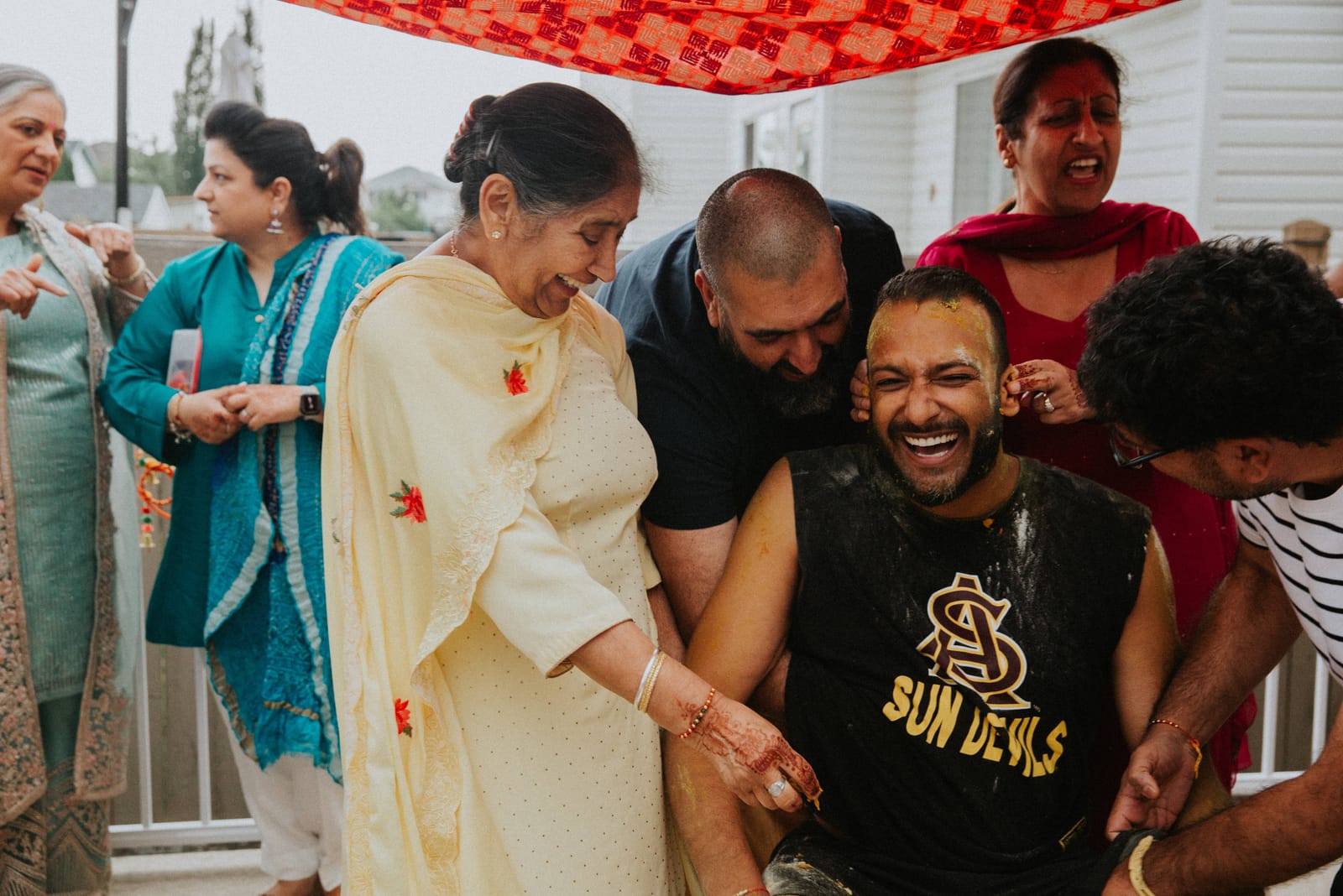
- you’re having a multi-day wedding where each event has its own sound, like a Sangeet full of music or a Haldi full of laughter.
It might not be if:
- you want a music-video edit with heavy effects and dramatic slow motion of everything;
- you’d like lots of styled set-ups and are happy to spend time recreating moments.
I’ll be straight with you: if the second list is what you want, I’m not the right fit, and that’s okay. It’s better to know before you book.
How I Approach Wedding Films
Here’s how I describe my style on my pricing page: “My video style is documentary-oriented — I try to hear and see and make a story from your wedding day or week.”
That’s what I’m doing on your wedding day. Listening for the quiet moments between the loud ones, watching for the reactions, then piecing it together into a film you’ll actually want to rewatch.
One Google review put it better than I can: “Moein’s quality of work is second to none. His video production is personalized, not all cookie cutter, and well thought out. The colour capture, the cuts, and the audio overlays are brilliant.”
What my video packages include:
- a highlight film;
- ceremony and reception edits on most packages;
- an extended highlight film on larger packages;
- an engagement session with every package.
Single-day videography starts at $3,750 and multi-day starts at $7,490. If you want photos and video together, photo + video from one team starts at $8,750 for one day and $17,990 for a multi-day wedding. For multi-day Indian and South Asian weddings, my Indian wedding videography page shows how I film each event. All starting prices are on my pricing page.
Still deciding whether you need photos, video or both? My guide to photographer vs videographer for Indian weddings walks through it.
If documentary style sounds like you, tell me about your day: who’s speaking, what matters to your family, and what you want to remember. I’d love to hear it. Get in Touch
Frequently Asked Questions
What is the difference between cinematic and documentary wedding videos?
A documentary-led film is built from real moments and real sound, with little staging. A production-led cinematic film relies more on posed shots, styled set-ups and music. Many films, mine included, use cinematic camera work but let the real moments tell the story.
Will you ask us to pose for the video?
Only a little, during your couple portraits, where I’ll suggest where to walk or stand. The rest of the day I film what happens without stopping it.
Do documentary films include the speeches and vows?
Real voices are the heart of a documentary film, so vows and speeches usually carry the story. With me, ceremony and reception edits come with most packages.
How much does wedding videography cost?
With MH Photography, single-day videography starts at $3,750 and multi-day starts at $7,490. Photo + video starts at $8,750 for a single-day wedding.
Watch my wedding films on the videography page.