In This Guide
- Understanding the Anand Karaj
- Gurdwara Photography Protocols
- Pre-Wedding Celebrations
- Key Ceremony Moments to Capture
- The Reception & Bhangra
- Edmonton Gurdwaras & Venues
- Why Cultural Expertise Matters
- Frequently Asked Questions
Quick Answer: What Makes Sikh Wedding Photography Different?
Sikh wedding photography requires a photographer who understands the Anand Karaj ceremony, Gurdwara protocols, and the spiritual significance of each moment. The four Laavan (hymns) happen once and cannot be re-staged. Your photographer must know exactly when the couple will rise, bow, and circle the Guru Granth Sahib. At MH Photography, Moein Habibi has photographed dozens of Sikh weddings across Edmonton, Alberta, and offers dedicated multi-day packages starting at $6,490 for photography, $7,490 for videography, and $17,990 for combined coverage. Serving Sherwood Park, St. Albert, Spruce Grove, and beyond.
Understanding the Anand Karaj
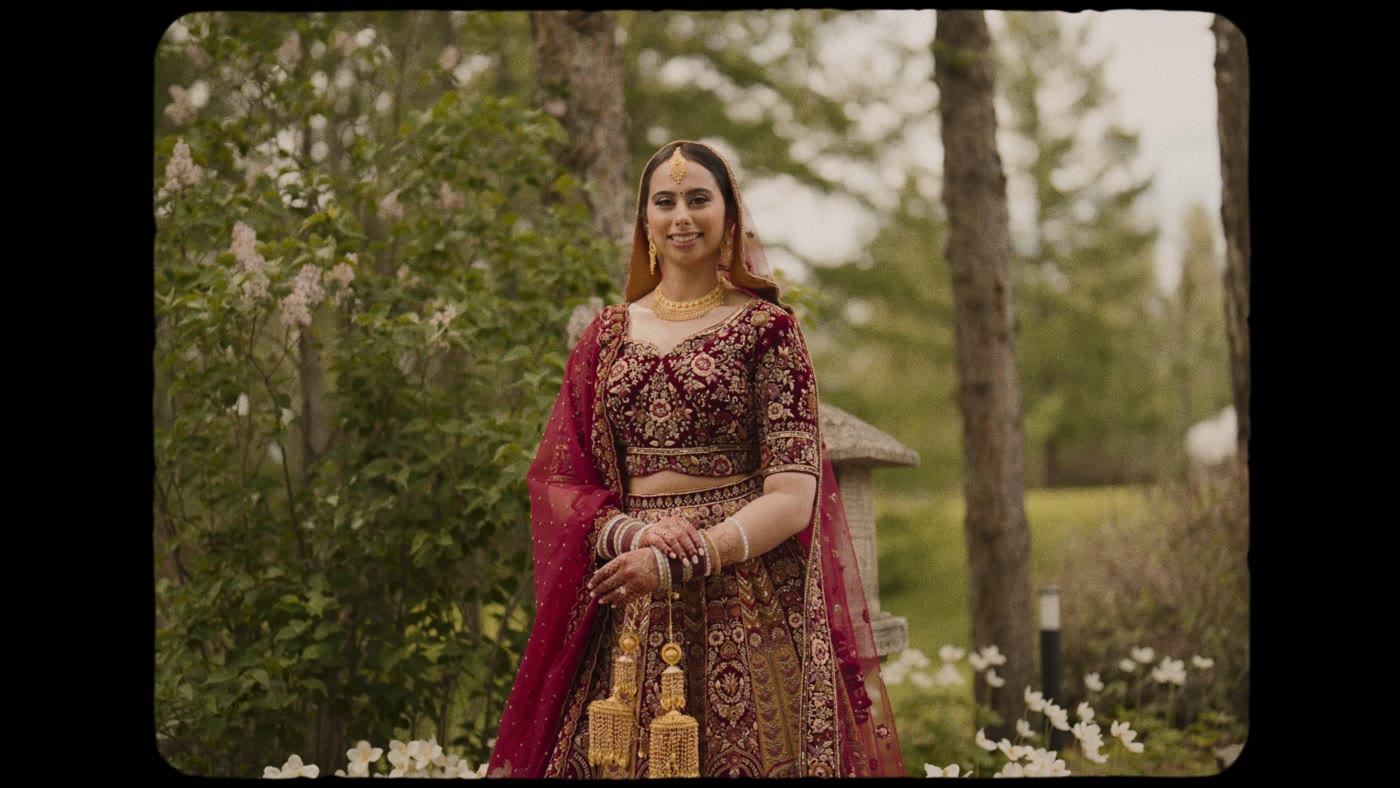
The Anand Karaj — “Blissful Union” in Punjabi — is one of the most beautiful and spiritually profound wedding ceremonies I have the privilege of photographing. It is not simply a wedding. It is a sacred covenant made in the presence of the Guru Granth Sahib, the holy scripture that serves as the eternal Guru of Sikhism. Every element of the ceremony, from the hymns to the circling of the holy book, carries deep spiritual meaning that has been practiced for over four centuries.
As a photographer who has covered dozens of Sikh weddings in Edmonton and across Alberta, I approach every Anand Karaj with both artistic intention and deep respect. Understanding what is happening — and why it is happening — is not optional. It is the difference between capturing a moment and capturing its meaning. A photographer who does not understand the Laavan cannot anticipate when the couple will rise, when they will bow, when the congregation will stand. And those split-second transitions are where the most powerful images live.
| Stat | Figure | Source |
|---|---|---|
| Average Indian Wedding in Canada | $100,000+ | Plan Events Canada, 2025 |
| Couples Ranking Photography #1 Priority | 34% | The Knot, 2025 |
The Anand Karaj centres on the four Laavan — four hymns composed by Guru Ram Das Ji, the fourth Sikh Guru. Each Laav represents a stage in the couple’s spiritual journey together. During each Laav, the Granthi (priest) reads the hymn aloud, and then the couple walks clockwise around the Guru Granth Sahib while the congregation sings the same hymn. The groom leads, holding one end of his palla (scarf), with the bride holding the other end — symbolizing their union and the bride’s willing commitment to walk this path together.
The four Laavan describe:
- First Laav: The commitment to righteous married life. Duties to family, society, and God. The couple pledges to embrace dharma together.
- Second Laav: Meeting the True Guru. The couple acknowledges their fears and ego, beginning to shed them through devotion and love.
- Third Laav: Detachment from worldly desires. A deeper spiritual awakening where the couple’s love for each other becomes an expression of their love for the divine.
- Fourth Laav: The state of perfect harmony and bliss. The soul merges with the divine, and the marriage is sealed in eternal peace. This is the Anand — the bliss — that gives the ceremony its name.
Photographically, each Laav offers unique moments. The first is often tentative and emotional — the reality of the commitment setting in. By the fourth, there are often tears of joy, smiles, and a visible sense of peace on the couple’s faces. I position myself to capture the couple’s expressions as they circle, the family’s reactions (especially parents), and the beautiful interplay of the palla connecting them.
Gurdwara Photography Protocols
Photographing inside a Gurdwara requires understanding and respecting specific protocols. These are sacred spaces, and my role as a photographer is to document the ceremony without ever becoming a distraction from it. Here is what every photographer needs to know — and what you should verify your photographer already knows before hiring them for a Sikh wedding:
Protocol Requirement Why It Matters
Head Covering Required at all times Sign of respect in the presence of the Guru Granth Sahib
Shoes Remove before entering the Darbar Sahib (prayer hall) Maintaining the sanctity of the sacred space
Camera Position Never turn your back to the Guru Granth Sahib The holy scripture is treated with the reverence due to a living Guru
Movement Move slowly and quietly, avoid walking between the couple and the Guru Granth Sahib Ceremony should never be disrupted by photographer movement
Flash Use sparingly or not at all — ambient and natural light preferred Flash can be disruptive during prayers and hymn singing
Sitting Sit on the floor when not actively photographing; never stand taller than the Guru Granth Sahib Humility and respect for the sacred scripture
Langar If invited to the communal meal, participate respectfully Langar is open to all — equality is a core Sikh value
Photographer Tip
I always arrive at the Gurdwara 30 to 45 minutes early to introduce myself to the Granthi and any committee members, ask about specific preferences for photographer placement, and get a feel for the light conditions. Building this relationship before the ceremony starts makes everything smoother.
I use silent or electronic shutter modes during the ceremony to eliminate the clicking sound that can be distracting during prayers. I work with fast lenses (f/1.4 to f/2.0) that perform well in the typically warm, ambient light of a Gurdwara prayer hall without needing flash. When I do use flash — usually during the reception — it is always bounced and diffused, never direct.
Pre-Wedding Celebrations
Mehndi
The mehndi ceremony is typically held at the bride’s home or a family member’s house. The bride’s hands and feet are adorned with intricate henna designs while surrounded by her closest female relatives and friends. The atmosphere is intimate, joyful, and full of music. From a photography perspective, the mehndi offers stunning detail shots of the henna work, candid moments of dancing and singing, and emotional interactions between the bride and her mother, sisters, and friends.
Jaggo
The Jaggo is one of my favourite Punjabi wedding traditions to photograph. Held the night before the wedding, the Jaggo is a festive procession through the neighbourhood led by family members carrying a decorated brass pot (the jaggo) on their head, lit with candles or diyas. The family dances through the streets to the beat of dhol drums, visiting relatives’ homes and inviting them to the wedding. The energy is extraordinary — pure, unbridled joy and celebration.
Photographing the Jaggo requires working in low light with moving subjects — it is technically challenging but incredibly rewarding. The candlelight from the jaggo pot, the street lights, the faces illuminated by the warm glow, the motion of the dancing — these images have an energy and authenticity that is hard to match at any other point in the celebration.
Sangeet
The sangeet is the big pre-wedding party featuring choreographed family performances, professional dancers, a DJ, and enough energy to power a small city. Both families prepare dance routines for weeks in advance, and the performances are often elaborate, emotional, and hilarious. The groom’s family performs for the bride’s family and vice versa — it is a joyful competition of love and creativity.
Photographer Tip
For the sangeet, coordinate with the DJ to understand the lighting setup in advance. Many sangeet venues use dramatic coloured lighting and spotlights that can be challenging for photography. I typically ask for a few minutes of clean, white light during key performances so the skin tones and outfit colours read naturally in photos.
Maiyan / Haldi
The Maiyan is the Punjabi version of the Haldi ceremony — a turmeric and oil application that serves as a blessing and beautification ritual. The bright yellow turmeric paste against colourful clothing creates vivid, striking images. This ceremony is deeply emotional as parents and grandparents take turns blessing the bride or groom, and the close, physical nature of the ritual — hands touching faces, paste being applied gently — produces some of the most intimate and tender photographs of the entire celebration.
Baraat
The baraat — the groom’s procession — is pure, unfiltered joy. The groom arrives at the ceremony venue accompanied by his family and friends, dancing to the thunderous beat of dhol drums. In Edmonton, I have shot baraats that have stopped traffic on major roads, drawn applause from passersby, and turned parking lots into impromptu dance floors. The groom often arrives on a decorated horse, in a vintage car, or simply walking — surrounded by 50 to 200 of his closest people, all dancing.
A Sikh wedding is not one event. It is a celebration that unfolds over days, each ceremony building on the last, each moment carrying the weight of centuries of tradition and the lightness of present-day joy.
Key Ceremony Moments to Capture
The Anand Karaj follows a specific sequence, and every moment matters. Here is the timeline of key photographic moments during a typical ceremony, in order:
Moment What Happens Photography Focus
Milni Groom’s family and bride’s family formally meet, exchange garlands Emotional embraces, fathers meeting, garland exchange
Ardas (Opening Prayer) Granthi leads opening prayer, congregation stands Wide shots of congregation, groom’s anticipation
Bride’s Entrance Bride enters the Darbar Sahib, often with her father and brothers Bride’s expression, father’s emotion, groom’s first look
Palla Ceremony Bride’s father places one end of the groom’s scarf in his daughter’s hands Father’s hands, daughter’s face — deeply emotional moment
First Laav First circling of Guru Granth Sahib The couple rising together for the first time as partners
Second Laav Second circling — spiritual awakening Growing confidence, family reactions
Third Laav Third circling — detachment and devotion Couple’s absorbed expressions, emotional congregation
Fourth Laav Final circling — bliss achieved Joy, tears, relief, the moment they complete the circle
Anand Sahib Hymn of bliss sung by congregation Wide shots of the entire sangat celebrating
Ardas & Hukamnama Closing prayer and divine order Couple bowing together, receiving blessings
The Reception & Bhangra
Sikh wedding receptions are legendary. The grand entrance, the speeches, the dinner, and then — the bhangra. When the DJ drops the first beat and the dhol kicks in, the dance floor explodes. I am not exaggerating. Punjabi receptions have more energy, more movement, and more genuine joy on the dance floor than any other celebration I photograph. Uncles who looked serious all day are suddenly doing moves that defy physics. Grandmothers are clapping in time. Kids are being thrown in the air (and, mercifully, caught).
I love photographing reception celebrations because they produce some of the most genuine, unposed images in any wedding gallery. The laughter, the sweat, the pure abandonment of self-consciousness — this is where families reveal who they really are, and capturing that authenticity is what I live for.
Global Wedding Photography Market$26.9BFortune Business Insights, 2026
Edmonton Gurdwaras & Venues
Edmonton has a vibrant and growing Sikh community, and the Sikh Heritage Foundation provides excellent resources for understanding the traditions and spiritual significance of the Anand Karaj. Several Gurdwaras regularly host Anand Karaj ceremonies. I have photographed at most of them and am familiar with the lighting conditions, space constraints, and protocols at each. Popular ceremony venues include Gurdwara Singh Sabha, Gurdwara Millwoods, and the Sikh Society of Alberta. For receptions, many families choose venues like the Oasis Centre and other large banquet halls in south Edmonton that can accommodate 300 to 600+ guests comfortably.
Having experience at these specific venues means I know exactly where to position myself for the best angles, how the light changes through the ceremony, and how to work within the space without being disruptive. This venue-specific knowledge is something that only comes from experience, and it makes a significant difference in the final images.
Why Cultural Expertise Matters
I want to be direct about something: not every photographer is qualified to shoot a Sikh wedding. Technical skill is important, yes. But cultural knowledge is non-negotiable. A photographer who does not understand the significance of the Laavan will not know when to shoot. A photographer who has never been in a Gurdwara may accidentally disrespect the space. A photographer who does not know what a Jaggo is will not know how to light it, how to move with it, or what moments matter most.
I have invested years in learning about Sikh traditions, building relationships with families in Edmonton’s Punjabi community, and developing the technical skills needed to photograph in the unique conditions of Gurdwara ceremonies and Punjabi celebrations. When you hire me for your Sikh wedding, you are hiring someone who genuinely understands and respects your culture — not someone who is going to Google it the night before.
Photographer Tip
When interviewing photographers for your Sikh wedding, ask them to name the four Laavan and explain what happens during each one. Ask them about Gurdwara photography protocols. Ask to see full galleries from at least three previous Sikh weddings. Their answers will tell you everything you need to know.
Key Takeaways
- The Anand Karaj’s four Laavan are the spiritual heart of the ceremony — your photographer must know them intimately
- Gurdwara photography requires strict protocols: head covering, no shoes, never turning back to Guru Granth Sahib
- Sikh weddings span multiple days with mehndi, jaggo, sangeet, haldi, baraat, ceremony, and reception
- Multi-day coverage packages are essential — a single-day package cannot do justice to the full celebration
- Cultural expertise is non-negotiable — ask to see full galleries from previous Sikh weddings
- The baraat and bhangra at the reception produce some of the most energetic, joyful images you will ever see
Planning a Sikh Wedding in Edmonton? I would be honoured to document your Anand Karaj and every celebration surrounding it. From the mehndi to the last bhangra beat, I will capture your story with the cultural sensitivity and artistic care it deserves. Let us connect over chai. Book a Free Consultation
Frequently Asked Questions
How many hours of coverage do I need for a Sikh wedding? For the main wedding day (baraat, milni, Anand Karaj, and reception), plan for 12 to 16 hours. For the full multi-day celebration including mehndi, jaggo, sangeet, and haldi, I offer multi-day packages that cover every event comprehensively.
Can you shoot at any Gurdwara in Edmonton? Yes. I have photographed at multiple Gurdwaras in the Edmonton area and am familiar with the protocols and lighting at each. I always coordinate with the Gurdwara committee and the Granthi before the ceremony to ensure everything runs smoothly.
Do you provide videography for Sikh weddings too? Absolutely. I offer combined photography and videography packages that are ideal for Sikh weddings. Having the same team handle both ensures seamless coordination across all events and days, with no communication gaps between separate vendors.
How far in advance should we book? Sikh weddings often fall on auspicious dates from the Nanakshahi calendar, and these popular dates fill up fast. Planning resources on WeddingWire Canada can help you get organized early. I recommend booking 10 to 14 months in advance for peak season (May through September). Off-season dates have more flexibility.
What should we tell our families about the photographer? Let your families know that I will be present but unobtrusive. I will cover my head, remove my shoes, and respect all protocols. During the Laavan, I will move quietly and stay low. During the baraat and reception, I will be right in the action. Encourage family members to be themselves — the best photos come from genuine moments.
How Much Does a Sikh Wedding Photographer in Edmonton Cost?
Sikh wedding photography in Edmonton typically costs $5,000 to $12,000 for multi-day coverage with two photographers. At MH Photography, single-day packages start at $2,250 for photography, $3,750 for videography, and $8,750 for photo and video. Multi-day packages, designed for celebrations with Mehndi, Jaggo, Anand Karaj, and reception events, start at $6,490, $7,490, and $17,990.
Related Guides
- Indian Wedding Photography Edmonton: Complete Guide
- Planning a Punjabi Wedding in Edmonton
- Baraat Photography: Groom Entrance Guide
- Haldi Ceremony Photography Guide
- Sangeet Night Photography Tips
- Vidaai Photography: Emotional Indian Wedding Moments
- Best Edmonton Venues for Indian Weddings
- Wedding Photographer Cost Edmonton 2026
Explore my Indian & Sikh wedding gallery or view packages and pricing for multi-day coverage options.
Ready to book? Get in touch — currently booking 2026 & 2027.