In This Guide
- Why Understanding Traditions Matters for Photography
- Hindu Wedding Ceremonies
- Sikh Wedding Ceremonies
- Muslim Wedding Ceremonies
- Pre-Wedding Events Across All Traditions
- Tips for Couples Working with Photographers
- Frequently Asked Questions
Why Understanding Traditions Matters for Photography
I have a rule when I photograph South Asian weddings: I never walk into a ceremony without understanding what is about to happen. Every ritual, every gesture, every sacred moment — I study it beforehand. Because here is the truth: if your photographer does not understand your traditions, they will miss the moments that matter most to you.
South Asian weddings are not one-size-fits-all. A Hindu wedding is different from a Sikh wedding, which is different from a Muslim wedding. Even within these traditions, customs vary dramatically by region, family, and generation. A Gujarati Hindu wedding looks nothing like a Bengali Hindu wedding. A Punjabi Sikh wedding has different customs than a Kerala Christian wedding. The diversity is incredible.
As a South Asian wedding photographer in Edmonton, I have had the privilege of photographing ceremonies across all major traditions. Each one has taught me something new. However, there are core elements and key moments in each tradition that every photographer — and every couple — should understand.
| Stat | Figure | Source |
|---|---|---|
| Average Canadian Wedding Cost | $39,000 | WeddingWire Canada, 2025 |
| Average South Asian Wedding in Canada | $100K+ | Plan Events Canada, 2025 |
The investment families make in South Asian weddings is extraordinary. With budgets that often exceed $100,000 — compared to the Canadian average of $39,000 — these celebrations deserve a photographer who can do them justice. Moreover, 87% of couples hire a professional photographer, and for South Asian families, photography and videography often represent one of the largest single vendor investments.
Hindu Wedding Ceremonies
Hindu weddings are among the most visually rich and ritual-heavy ceremonies I photograph. The ceremony centres around the sacred fire (agni), which serves as a divine witness to the marriage. Here are the key moments, in the order they typically happen.
Jaimala — The Garland Exchange
This is often the first moment of the ceremony. The bride and groom exchange flower garlands, symbolizing their acceptance of each other. It is a playful moment — the groom’s friends often lift him up to make it harder for the bride to reach his neck, while her friends do the same. The laughter, the competitiveness, the joy — it is one of the most animated moments of the entire day.
From a photography perspective, the jaimala requires quick reflexes. The garlands are exchanged in seconds, and there are often height changes, movement, and crowds pressing in. I position myself where I can see both faces at the moment of the exchange.
Kanyadaan — Giving Away the Bride
The bride’s father places her hand in the groom’s hand, symbolizing his trust and the transfer of responsibility. This is one of the most emotional moments in any Hindu wedding. Fathers often break down. Mothers often join them. The entire family feels the weight of this ritual.
I use a longer lens for kanyadaan to capture the emotion without intruding. The close-up of the joined hands, the father’s expression, the bride’s tears — these images become some of the most treasured in the gallery.
Mangal Pheras — Circling the Sacred Fire
The couple walks around the sacred fire four times (in North Indian tradition) or seven times (in South Indian tradition). Each round represents a vow — prosperity, strength, spiritual growth, and eternal love. This is the most sacred portion of the ceremony.
Photographically, the pheras require careful positioning. The fire creates beautiful warm light, but it also creates harsh shadows. I balance ambient light with the fire’s glow to capture the couple in motion without losing the warmth of the flames. In addition, I ensure I capture each round, because each one carries a different promise.
Sindoor and Mangalsutra
The groom applies vermillion (sindoor) to the bride’s hair parting and places the sacred necklace (mangalsutra) around her neck. These are the definitive moments that mark the couple as married. The expressions — the nervousness, the tenderness, the quiet smiles — are incredibly powerful to capture.
For Couples
Let your photographer know if your pandit will allow close access during the pheras and sindoor. Some pandits prefer photographers to maintain distance during these sacred moments, while others are comfortable with close access. Knowing this in advance helps your photographer plan their positioning.
Sikh Wedding Ceremonies
The Sikh wedding ceremony — the Anand Karaj, meaning “blissful union” — is one of the most spiritual and moving ceremonies I have the honour of photographing. The Sikh Heritage Foundation offers detailed resources on the history and significance of the Anand Karaj for those who wish to learn more. It takes place in a Gurdwara (or sometimes in a banquet hall with the Guru Granth Sahib present) and centres entirely around the holy scripture.
Milni — The Meeting of Families
Before the ceremony begins, the two families meet formally. Male relatives from each side are matched and they greet each other, often with garlands and embraces. It is a joyful and sometimes competitive event — who can lift whom higher during the hug? The energy is playful and warm.
Ardas — The Opening Prayer
The ceremony begins with the Ardas, a communal prayer. Everyone stands with heads covered and hands clasped. It is a moment of stillness and devotion. I capture the family’s expressions during this prayer — the closed eyes, the clasped hands, the reverence.
Laavan — The Four Rounds
The heart of the Anand Karaj is the Laavan. The couple circles the Guru Granth Sahib four times while the corresponding hymns are read. Each Laav represents a progressive stage of love:
- First Laav: The couple commits to their duties toward each other and their families. It represents the beginning of the spiritual journey together.
- Second Laav: The couple finds courage in each other. Fear dissolves. Trust deepens.
- Third Laav: Detachment from worldly desires. The couple focuses on spiritual growth and inner peace.
- Fourth Laav: The ultimate union. The couple’s souls merge with the divine. This is the culmination of the ceremony.
Each Laav is a distinct emotional moment. The first is often nervous and tentative. By the fourth, there are tears of joy. I position myself to capture the couple’s faces as they complete each round, as well as the family’s reactions. The mother who is wiping tears during the third Laav, the father who finally smiles during the fourth — these are the moments that tell the complete story.
Bhog and Final Ardas
The ceremony concludes with the completion of the hymn and a final prayer. The congregation shares karah prasad (sacred sweet pudding). This is a moment of community and celebration, and it produces beautiful candid images of families greeting, congratulating, and embracing.
The Anand Karaj is not just a wedding ceremony. It is a spiritual journey that unfolds in four stages before your eyes. Photographing it requires reverence, patience, and deep respect for the sacred space.
Muslim Wedding Ceremonies
Muslim wedding ceremonies — the Nikah — carry a quiet dignity and spiritual depth that creates some of the most powerful photographs I take. The Nikah is a solemn contract between the couple, witnessed by family and an imam.
The Nikah Ceremony
The core of the Nikah involves the imam reading from the Quran, the exchange of vows (ijab and qubool — offer and acceptance), and the signing of the marriage contract (nikahnama). The mahr (a gift from the groom to the bride) is agreed upon and sometimes presented.
The moment of qubool — when the bride says “I accept” — is the most powerful moment of the ceremony. It is quiet, intimate, and carries enormous weight. The room is silent. Every eye is on the bride. The photographer needs to be ready, because the moment passes in seconds.
Rukhsati — The Bride’s Departure
Similar to the Hindu vidaai, the rukhsati is when the bride leaves with her husband. It is deeply emotional. The Quran is often held over the bride’s head as she walks to the car. Family members are crying, hugging, praying. These images carry raw, genuine emotion.
Walima — The Reception
The walima is the wedding banquet, often hosted by the groom’s family. It is a celebration of the marriage, and it can range from intimate to grand. In Edmonton’s South Asian community, walimas often feature hundreds of guests, elaborate decor, and joyful celebration.
Cultural Note
In many Muslim wedding ceremonies, men and women celebrate separately. Your photographer needs to be prepared for this. Having a female photographer or second shooter for the women’s side is often appreciated and sometimes required. I work with trusted female second shooters for exactly this reason.
Pre-Wedding Events Across All Traditions
Regardless of religious tradition, South Asian weddings share many pre-wedding events. These are often the most colourful, most energetic, and most photographically exciting parts of the celebration.
Mehndi
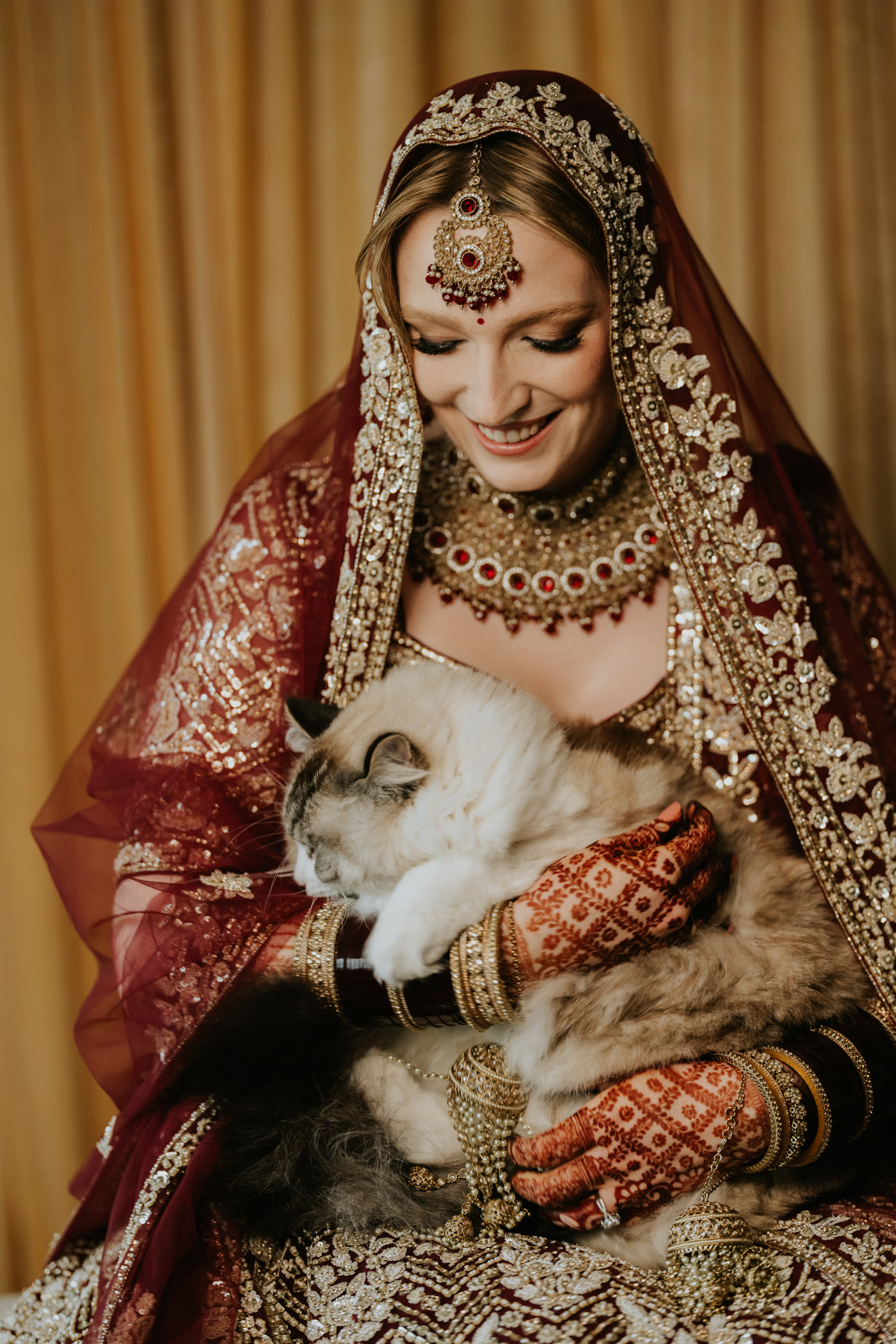
The mehndi (henna) ceremony is a beloved tradition across Hindu, Sikh, and Muslim weddings. The bride’s hands and feet are decorated with intricate henna designs while friends and family celebrate. The atmosphere is intimate and joyful — music, dancing, laughter, and the sweet smell of henna.
Photographically, the mehndi offers incredible detail shots (the henna artist’s work, the patterns on the bride’s hands) and wonderful candid moments (the dancing, the laughter, the emotional conversations). I capture both, ensuring the gallery tells the full story of the event.
Sangeet
The sangeet is the big pre-wedding party, most common in Punjabi and North Indian weddings. Families prepare choreographed dance performances for weeks. The energy is electric. The lighting is dramatic. The dance floor is packed. For a photographer, it is exhilarating and challenging in equal measure.
Haldi / Maiyan / Ubtan
The turmeric ceremony — called haldi in Hindi, maiyan in Punjabi, and ubtan in Urdu — involves family members applying a turmeric paste to the bride and groom. It symbolizes purification, blessings, and protection. The deep yellow of the turmeric against colourful clothing makes for stunning photos.
Tips for Couples Working with Photographers
Whether your wedding is Hindu, Sikh, Muslim, or a multi-faith celebration, here are my recommendations for getting the best possible photography coverage.
- Share your ceremony details in advance. Write out a timeline with the name and brief description of each ritual. Even experienced photographers appreciate this because every family does things slightly differently.
- Introduce your photographer to your priest, pandit, granthi, or imam. This relationship matters. When your officiant trusts the photographer, they allow better access during key moments.
- Discuss photography restrictions. Some Gurdwaras have strict rules about photography during the Anand Karaj. Some mosques do not allow photography during the Nikah itself. Know these rules ahead of time and communicate them to your photographer.
- Build in time for portraits. With so many ceremonies and events packed into each day, it is easy to run behind schedule. Build buffer time for couple portraits. The golden hour does not wait for anyone.
- Choose a photographer who specializes in South Asian weddings. The Professional Photographers of Canada (PPOC) maintains standards for professional accreditation, but specialization in South Asian ceremonies goes beyond general credentials. This is not elitism — it is practicality. The skills required to photograph a multi-day, multi-ceremony South Asian wedding are specific and take years to develop.
I offer multi-day packages specifically designed for South Asian celebrations. Combined photography and videography packages are also available, which simplifies coordination across multiple events.
Key Takeaways
- Every South Asian wedding tradition has specific moments that happen once — your photographer must know them
- Hindu ceremonies centre around the sacred fire, with key moments including jaimala, kanyadaan, and pheras
- Sikh ceremonies follow the four Laavan around the Guru Granth Sahib, each representing a stage of love
- Muslim ceremonies emphasize the quiet dignity of the Nikah and the emotional rukhsati
- Pre-wedding events like mehndi, sangeet, and haldi are shared across traditions and are photographically rich
- Communication between couple, officiant, and photographer is essential for the best results
Planning a South Asian Wedding? I would love to learn about your traditions and your vision. Every ceremony is unique, and I take the time to understand yours fully before the wedding day. Let us connect over coffee and talk about your celebration. Start the Conversation
Frequently Asked Questions
Do you photograph all South Asian wedding traditions? Yes. I have experience with Hindu, Sikh, Muslim, and multi-faith ceremonies in Edmonton, including at the Hindu Society of Alberta and multiple Gurdwaras across the city. I also photograph Ismaili, Jain, and mixed-tradition weddings. Before your wedding, I study your specific traditions and create a shot list tailored to your ceremonies.
Can you photograph at a Gurdwara? Absolutely. I have photographed at several Gurdwaras in the Edmonton area. I understand and respect the protocols — covering my head, removing shoes, maintaining respectful distance during the Laavan, and working quietly during prayers.
Do you have a female photographer for gender-separated events? Yes. I work with experienced female second shooters who can photograph women-only events like ladies-only mehndi parties or gender-separated walima sections. This ensures complete coverage while respecting cultural preferences.
How do you handle the different lighting at each event? Each event requires a different approach. Mehndi events usually have natural light. Sangeets have dramatic DJ lighting. Ceremonies may have mixed light with the added warmth of fire. Receptions are often dimly lit with spot lights. I bring multiple lighting setups and adapt to each environment. My equipment handles low-light situations beautifully.
What is the typical turnaround time for a multi-day wedding gallery? For a multi-day South Asian wedding, I deliver a sneak peek within 48 hours and the full gallery within 6 to 8 weeks. Multi-day weddings generate 1,500 to 3,000+ images, and each one is individually edited. I do not rush this process because your images deserve careful attention.
Browse real celebrations in my South Asian wedding gallery or view packages and pricing.